August 25, 2026
Pile Length Testing: Choosing the Right Investigation Method
GBG Group uses geophysical testing methods to estimate existing pile lengths where construction records are incomplete or require verification.
Construction records are not always complete. Original pile lengths may be missing, poorly documented or require verification before redevelopment, structural assessment or remediation works. When this occurs, geophysical testing provides a practical way to estimate the in-situ length of existing piles without extensive excavation.
GBG Group offers three established solutions to investigate pile length: Pile Integrity Testing (PIT), Parallel Seismics, and Downhole Magnetometry. Each technique has different site requirements, advantages and limitations, making the choice of method dependent on the project objectives and site conditions.
Pile Integrity Testing (PIT)
Pile Integrity Testing (PIT), also known as Sonic Echo or Impulse Response, is typically used where access is available to the top of the pile. The method uses a low-strain impact, with a small instrumented hammer striking the pile head while an accelerometer or geophone records the resulting stress waves.
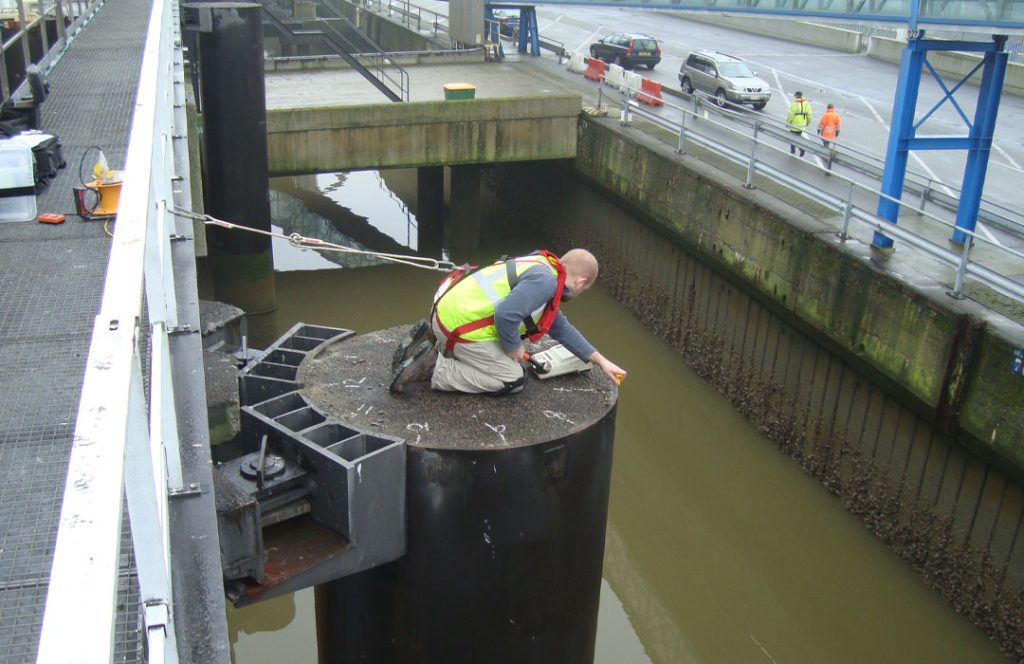
The travel time of the reflected wave from the pile toe is used to estimate pile length. The returning signal can also provide information on the integrity of the pile by identifying potential flaws or discontinuities that may affect its performance.
One of the key advantages of PIT is its efficiency. Once testing parameters have been established, multiple piles can often be assessed within a single day depending in access. Testing generally requires only access to the pile head, making it one of the least intrusive investigation methods.

Figure 1. Schematic of the PIT method theory and the influence of construction defects.
However, successful testing depends on suitable site conditions. The pile surface must provide good contact for the sensor, while debris or rough concrete can reduce signal quality. Internal defects may reflect the stress wave before it reaches the pile toe, potentially resulting in an interpreted pile length that is shallower than the actual foundation. Similarly, surrounding ground conditions, including soft saturated soils or rock socketing, can influence the returning signal and require careful interpretation.
PIT is generally most suitable for piles with a length-to-diameter ratio between approximately 10:1 and 30:1. Very short, wide piles or extremely long, slender piles can reduce the quality of the returned signal.

Figure 2. PIT reading showing the acoustic waveform for a pile designed for 12.5m. The first peak is the initial impact and the secondary peak is the returning signal from the toe.
Parallel Seismics
Where direct access to the pile head is limited or greater confidence in pile depth is required, Parallel Seismics provides an alternative approach.
This technique requires a borehole to be drilled adjacent to the pile and extending beyond the expected pile toe. A plastic pressure tube is installed within the borehole, allowing a hydrophone to record acoustic waves generated by striking the pile.
As the seismic wave travels down the pile and radiates into the surrounding ground, arrival times are recorded at regular depth intervals within the borehole. Because seismic energy travels faster through the pile than through the surrounding ground, a noticeable change in arrival times occurs once the receiver passes below the pile toe. This change is used to estimate the foundation depth.
Parallel Seismics is particularly valuable for existing structures where pile lengths are unknown. The technique also benefits from repeat measurements and post-processing to improve data quality where required.

Figure 3: Parallel Seismic testing schematic and example data.
Like all geophysical methods, there are limitations. The method may be less effective where piles are socketed into hard rock with similar acoustic properties to concrete, as the expected change in seismic response may not be well defined. Background vibration from traffic, construction activity or other environmental noise can also interfere with data quality.
Downhole Magnetometry
Unlike the previous methods, Downhole Magnetometry does not measure the concrete pile directly. Instead, it identifies the extent of the reinforcing steel within the pile by measuring variations in the Earth’s magnetic field.
A borehole magnetic gradiometer is lowered down a borehole adjacent to the pile. As the sensor passes reinforced sections of the pile, changes in the magnetic field are detected. Once the reinforcement cage ends, the magnetic response decreases, allowing the depth of the reinforcement to be interpreted.
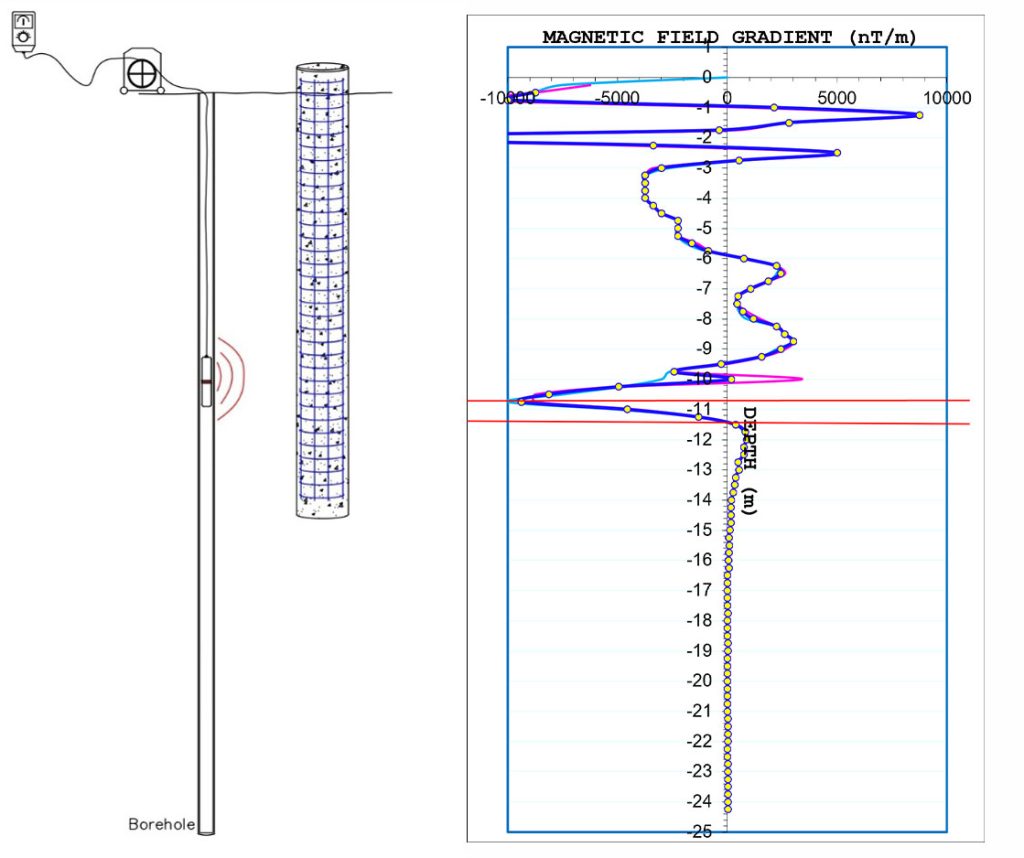
Figure 4. Downhole magnetometry schematic and data example
Combining Parallel Seismics and Downhole Magnetometry
In many situations, the most reliable solution is to combine Parallel Seismics and Downhole Magnetometry.
Both methods can utilise the same prepared borehole, making them highly complementary. While Parallel Seismics estimates the depth of the concrete pile, Downhole Magnetometry identifies the depth of the reinforcement cage. Comparing the two datasets provides an additional level of confidence and can assist in validating the interpreted pile depth.
For example, if Downhole Magnetometry clearly identifies the base of the reinforcement cage, this establishes a minimum depth for the concrete component of the pile. Any conflicting interpretation from the Parallel Seismic data above this depth can therefore be investigated further during analysis.
Because the borehole preparation requirements are largely the same, collecting both datasets during a single mobilisation is often an efficient way to improve confidence in the final interpretation.
Selecting the Right Method
No single methodology is suitable for every project. The preferred technique depends on several factors, including site access, pile geometry, surrounding ground conditions and the level of confidence required.
- Pile Integrity Testing (PIT) is a fast, non-destructive option where direct access to the pile head is available.
- Parallel Seismics is well suited to situations where an adjacent borehole can be drilled to allow the pile depth to be interpreted from borehole seismic data.
- Downhole Magnetometry identifies the extent of the reinforcement cage and provides valuable supporting information, particularly when combined with Parallel Seismics.
By selecting the most appropriate methodology, or combining complementary techniques where appropriate, engineers can obtain reliable information on existing pile foundations, even where construction records are incomplete or unavailable.
If you would like to learn more about pile length testing or discuss your structural investigation requirements, please contact us to discuss your project.
More News
View All
4,000+ Projects Across Australia and Asia-Pacific
Our experienced geophysical survey specialists work closely with engineers and project teams to design investigation strategies tailored to site conditions, risk profiles and engineering objectives. Speak directly with a geophysicist to discuss your project.

Contact Us
Please complete the form below and a member of our team will be in touch as soon as possible.