Seismic Refraction/Reflection

Understanding subsurface conditions is critical to the planning and delivery of energy infrastructure, particularly across long linear corridors and large, complex renewable energy sites. Geophysical surveys provide a rapid, non-intrusive means of mapping ground conditions at scale, supporting more informed decisions for route selection, design, and construction.
Contact UsProudly Servicing Industry Leaders
Energy Geophysics for Infrastructure and Network Development
GBG Group Australia provides specialist geophysical services to support the planning, design, and delivery of energy infrastructure surveys, including transmission lines, cable routes, pipelines, substations, and renewable energy developments. With the rapid growth of solar, wind, and associated transmission infrastructure, projects are increasingly located across large, complex, or marginal sites, including areas of variable geology, former industrial land, and remote terrain. Our approach delivers non-invasive subsurface insight across these environments, providing continuous information between intrusive investigation points and improving confidence in ground models used for design and construction.
Geophysical surveys are applied across linear corridors and key infrastructure locations to characterise subsurface conditions for route selection, trenchless crossing and horizontal directional drilling (HDD) design, solar and wind turbine foundation investigations, and earthing design considerations. These investigations enable early identification of subsurface variability, geohazards, and constraints that may not be identified through conventional investigation methods alone, supporting more efficient design and construction. By integrating geophysics into energy investigations, GBG enhances spatial coverage, reduces reliance on intrusive testing alone, and improves confidence in decision-making across projects from feasibility through to delivery.
Contact Us
Methods
We utilise the following geophysical methods:


Multi-Channel Analysis of Surface Waves (MASW)
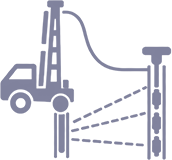
Downhole and Crosshole Seismic

Electrical Resistivity Tomography (ERT)

Vertical Electrical Soundings (VES)

Frequency and Time Domain Electromagnetics (FEM and TEM)

Ground Penetrating Radar (GPR)
Applications

Transmission, Cable and Pipeline Corridor Investigations
Characterisation of subsurface conditions along linear energy corridors, including transmission lines, underground cables, and pipelines, to support route selection, trenchless crossing (HDD) design, and identification of ground conditions and geohazards that may impact constructability and asset performance.

Substation and Energy Facility Investigations
Assessment of subsurface conditions for substations and energy facilities to support foundation design, construction planning, and identification of ground variability and geohazards that may influence asset performance and long-term stability.

Renewable Energy Site Investigations
Characterisation of subsurface conditions for renewable energy developments including solar and wind farms to support site selection, foundation design, and identification of ground conditions that may impact construction and long-term performance.

Earthing Design and Electrical Grounding Assessment
Assessment of subsurface conditions to support electrical earthing and grounding design, including characterisation of soil variability and conditions influencing grounding performance for substations and transmission infrastructure.
FAQs
Geophysical surveys are well suited to energy projects where understanding subsurface variability is critical, including transmission line corridors, cable routes, pipelines, substations, and renewable energy developments. They provide continuous spatial information to support route selection, design, and construction across complex project environments.
The most appropriate method depends on site conditions, target depth, and project objectives. In many cases, a combination of techniques is used to provide complementary information, with survey design tailored to support specific energy infrastructure and engineering outcomes.
Geophysical surveys do not replace intrusive investigations but provide continuous subsurface information between investigation points. They can be used prior to intrusive testing to develop an overall site model and guide targeted investigation, improving confidence and reducing uncertainty.
Typical requirements include site plans, project objectives, known ground conditions, and any existing geotechnical or environmental data. Information on access, corridor alignment, and operational constraints also assists in planning safe and efficient survey delivery.
Survey duration depends on the size and complexity of the project, including corridor length, site access, and investigation scope. Smaller site-based surveys can often be completed within a few days, while large linear corridor investigations may take longer depending on logistics and terrain.
Deliverables typically include processed geophysical data, interpreted sections or models, and engineering-focused commentary on subsurface conditions. Outputs are tailored to energy applications and may include corridor profiles, ground models, and identification of constraints to support design and construction.
Yes. Geophysical surveys provide continuous subsurface information along proposed alignments, helping identify ground variability, constraints, and geohazards that may influence route selection. This supports more informed planning and reduces risk during design and construction.
Yes. Geophysical surveys can assist in characterising subsurface conditions across solar and wind farm sites, including variability in soil and rock profiles relevant to foundation design. These investigations complement intrusive testing and support more efficient layout planning and foundation assessment.
Yes. Geophysical surveys can be designed for use in brownfield and previously developed sites, including areas with existing infrastructure or ground disturbance. Surveys are typically planned to minimise disruption while providing useful subsurface information to support redevelopment and design.
Why GBG Group for Energy Projects
GBG Group delivers geophysical survey solutions tailored to energy infrastructure projects, providing reliable subsurface insight to support design, construction, and risk management. Our approach focuses on practical outcomes, integration with geotechnical and environmental data, and delivering results that directly inform decision-making across the project lifecycle.
Geophysical Surveys for Energy Infrastructure
Geophysical surveys provide critical subsurface insight to support the design and delivery of energy infrastructure, including transmission lines, cable routes, pipelines, substations, and renewable energy developments. These investigations improve understanding of ground conditions across complex and often large project areas, supporting safer design, construction, and long-term asset performance.
Wind, Solar and Transmission Investigations
Geophysical methods are applied across renewable energy and transmission projects to characterise subsurface conditions for wind farms, solar developments, and associated infrastructure. Investigations support site selection, foundation assessment, and identification of ground variability that may influence construction and long-term performance of energy assets.
Route and Corridor Surveys
Geophysical surveys provide continuous subsurface information along linear infrastructure corridors, supporting route selection and design for transmission lines, pipelines, and cable routes. These investigations help identify ground variability, geohazards, and constraints that may impact constructability, including conditions relevant to trenchless crossing (HDD) design.
Survey Methods for Energy Projects
A range of geophysical techniques can be applied depending on site conditions and project objectives, with surveys tailored to provide relevant subsurface information for energy infrastructure projects. Methods are selected to characterise ground conditions, support foundation and grounding assessments, and complement traditional investigation approaches.
Latest Projects
View All

4,000+ Projects Across Australia and Asia-Pacific
Our experienced geophysical survey specialists work closely with engineers and project teams to design investigation strategies tailored to site conditions, risk profiles and engineering objectives. Speak directly with a geophysicist to discuss your project.
Contact Us
Please complete the form below and a member of our team will be in touch as soon as possible.
Our Partners
Partnering with industry leaders to strengthen technical capability and project delivery.