July 30, 2026
When Is Non-Destructive Testing (NDT) Used in Structural and Infrastructure Investigations?
Understanding how NDT techniques such as GPR, ultrasonic testing and acoustic methods help evaluate as-built design and structural integrity without damaging assets.
What is Non-Destructive Testing (NDT)?
Non-Destructive Testing (NDT) refers to a group of techniques used to evaluate the condition, composition and performance of materials or structures without causing damage. Rather than cutting, drilling or removing sections of a structure for inspection, NDT methods allow engineers and technicians to investigate internal conditions while keeping the asset fully intact and operational.
These techniques can detect hidden defects, deterioration, and weaknesses, as well as locate internal features, confirm construction details, and assess material condition.
As these techniques do not damage the structure being investigated, they are widely used in infrastructure maintenance, asset evaluation and structural investigations. By providing additional information about internal conditions, NDT helps engineers and asset owners make more informed decisions about design, maintenance and risk management.
Many critical assets are now operating beyond their original design life but cannot be taken offline. In these cases, NDT plays a key role in maintaining safety while allowing continued operation.
Common Applications of NDT in Infrastructure and Asset Assessment
Non-destructive testing is widely used across infrastructure, construction and asset management projects where understanding as-built design and structural condition is essential.
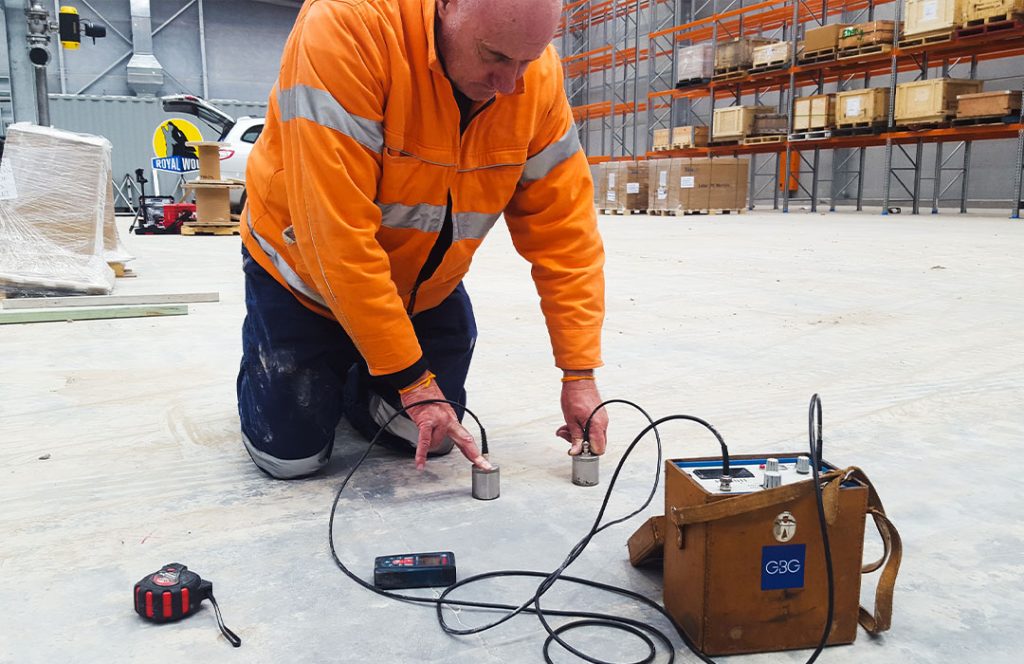
Concrete ultrasonic testing
Concrete Testing and Structural Assessment
NDT methods are commonly used to assess the composition and condition of concrete and masonry structures. Investigations can determine the size, depth and spacing of reinforcement, identify buried services, ducts or conduits, measure concrete or masonry thickness, evaluate the internal condition of the concrete, and identify embedded ties, fixings and anchors.
These techniques can detect defects such as cracking, honeycombing, micro-voiding or delamination. Results can also be calibrated against intrusive testing and material sampling to provide a more complete understanding of structural condition.
Pile Length and Condition Assessment
Piles are critical load-bearing elements that transfer structural forces to competent ground at depth. NDT techniques such as low-strain integrity testing, crosshole sonic logging (CSL), seismics, and magnetometry can be used to verify pile length, assess continuity, and identify defects or anomalies within the foundation system.
Dam and Spillway Condition Assessments
Dams and spillways form critical infrastructure and may be located in remote areas or approaching the end of their service life. NDT techniques such as Ground Penetrating Radar (GPR), ultrasonic methods, covermeters and acoustic testing can be used alongside high-resolution photogrammetry and LiDAR to provide updated information about structural condition and potential deterioration.
These investigations help asset managers evaluate structural integrity and plan maintenance or remediation strategies.
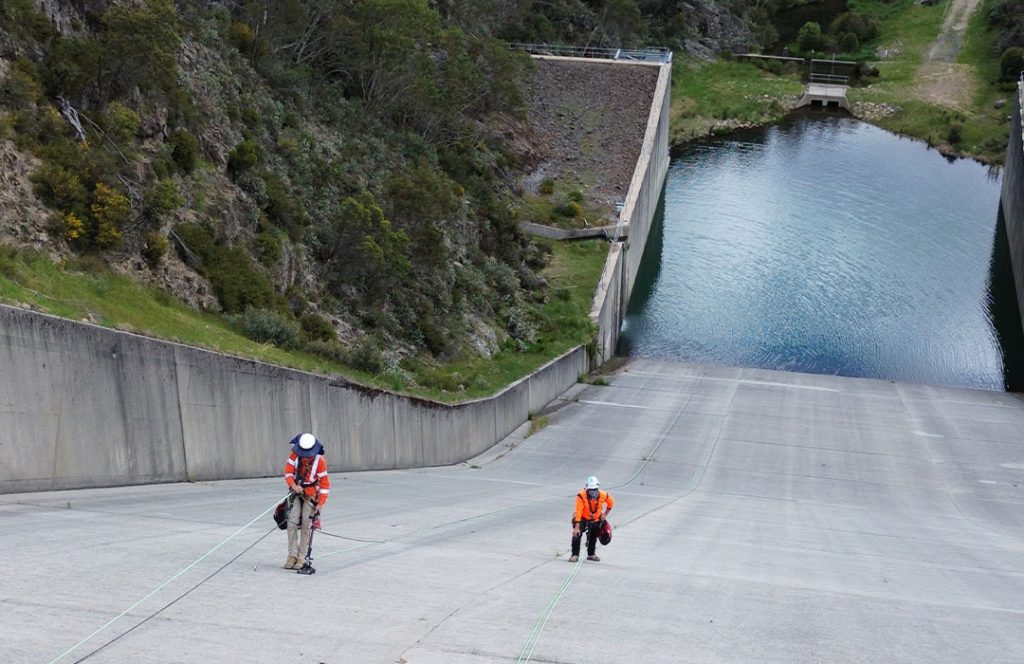
Dam spillway NDT structural investigation
Seawall and Marine Structure Investigations
Many seawalls in major cities are historic structures that have experienced long-term exposure to wave action and chemical processes. Over time, this can lead to structural deterioration.
Ground Penetrating Radar (GPR) is often used to understand the composition and condition of seawall structures. In some cases, seismic techniques such as Multi-channel Analysis of Surface Waves (MASW) are used alongside NDT to provide additional information about subsurface conditions beneath these assets.

MASW investigation of seawall
Tunnels and Underground Infrastructure
Tunnels experience significant loads and hydrostatic pressures due to their subsurface environment. NDT techniques such as GPR, Ultrasonic Pulse Echo (UPE) tomography and thermal imaging can be used to identify water ingress pathways and evaluate the internal condition of tunnel linings.
Bridge Investigations
Bridges are subject to dynamic loading from traffic and environmental exposure. NDT can help evaluate potential structural issues or deterioration using a range of techniques depending on the structure and materials involved.

Heritage Structure Investigations
Older buildings and heritage structures often require investigation before renovation or repurposing. NDT provides a way to understand the form of construction and structural condition without damaging the structure itself.
These techniques can be applied to timber, stone, masonry and early reinforced concrete structures to support conservation and redevelopment planning.
If you would like to learn more about NDT or discuss your structural investigation requirements, please contact us to discuss your project.
More News
View All
4,000+ Projects Across Australia and Asia-Pacific
Our experienced geophysical survey specialists work closely with engineers and project teams to design investigation strategies tailored to site conditions, risk profiles and engineering objectives. Speak directly with a geophysicist to discuss your project.

Contact Us
Please complete the form below and a member of our team will be in touch as soon as possible.